Gold price predictions for 2026 indicate a strong bullish trend with prices expected to rise significantly. Major financial institutions forecast gold prices ranging roughly from $4,000 to $4,900 per ounce by the end of 2026. Goldman Sachs leads with the most aggressive projection of $4,900 per ounce by December 2026, citing strong ETF inflows, central bank purchasing, and continued geopolitical and economic uncertainties as key drivers.
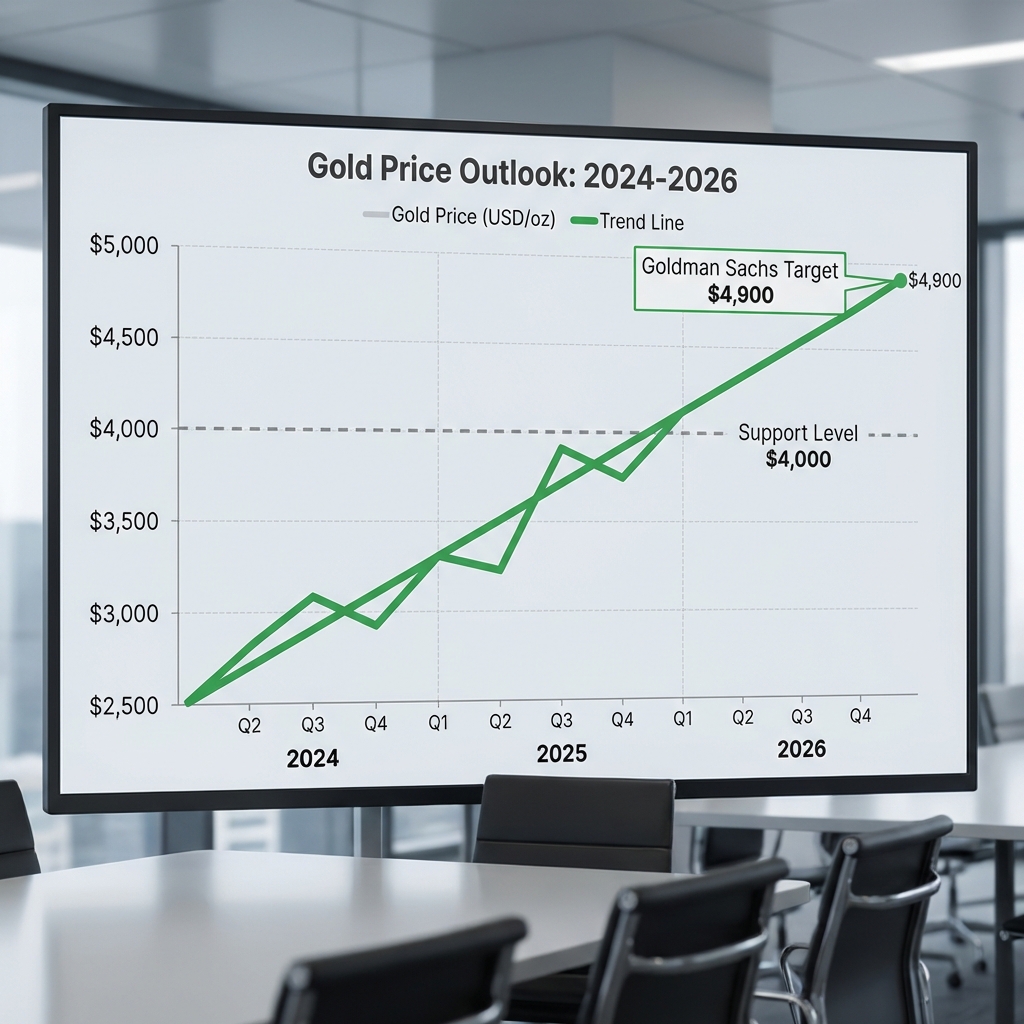
Deutsche Bank and J.P. Morgan predict gold prices around $4,000 per ounce during 2026, while technical analysis from InvestingHaven supports potential price milestones such as $4,200 or higher in the second half of the year. Factors fueling this outlook include anticipated Fed rate cuts, dollar weakness, inflation concerns, and structural demand for gold as a safe-haven asset and portfolio diversifier.
Key Price Forecasts for 2026
-
→
Goldman Sachs: $4,900 per ounce by December 2026
-
→
Deutsche Bank: $4,000 per ounce average in 2026
-
→
J.P. Morgan: $4,000 per ounce by Q2 2026
-
→
InvestingHaven (Technical): Ceiling around $4,200 in H2 2026
Primary Driving Factors
2026 Price Milestone Timeline
Overall consensus: Continued structural bull market potentially leading to historic price levels
The consensus among experts is a continued structural bull market for gold potentially leading to historic price levels through 2026, with upside risks prevailing over downside. This represents a paradigm shift from tactical safe-haven positioning to strategic long-term asset allocation driven by fundamental monetary system changes. For current gold prices and real-time market data, visit our live gold price tracker.
Why Are Central Banks Accelerating Gold Purchases?

The dramatic increase in central bank gold acquisition represents one of the most significant structural shifts in precious metals markets. Understanding this phenomenon provides critical insight into long-term price support mechanisms that underpin the bullish 2026 forecasts.
Strategic Reserve Diversification
Central banks worldwide are executing a strategic shift away from dollar-denominated assets, reflecting concerns about concentration risk and seeking greater balance in reserve compositions. This diversification accelerated following geopolitical developments that highlighted potential vulnerabilities in traditional reserve systems.
Key Motivations Behind Central Bank Gold Accumulation:
-
•
Protection against currency devaluation: As monetary authorities navigate unprecedented expansion of global money supply, gold provides a hedge against potential purchasing power erosion
-
•
Hedging against geopolitical uncertainties: Gold's borderless nature and universal recognition make it uniquely positioned for strategic reserve roles in an increasingly fragmented international system
-
•
Long-term wealth preservation: Central banks operate with multi-decade horizons that align with gold's historical performance as a store of value across centuries and monetary regimes
Country-Specific Acquisition Trends
China's accelerated purchasing program, running at approximately twice its historical average, signals a fundamental reassessment of optimal reserve composition by one of the world's largest economies. This systematic accumulation occurs amid broader efforts to internationalize the yuan and reduce dollar dependency. Learn more about global gold demand trends from the World Gold Council.
Russia's continued de-dollarization strategy has positioned gold as a cornerstone of its reserves restructuring. The systematic conversion of dollar holdings to gold reflects both economic calculations and strategic considerations in an evolving geopolitical landscape.
India's growing reserves amid economic expansion demonstrate the parallel tracks of modernization and traditional store-of-value principles. The world's second most populous nation maintains cultural affinity for gold while simultaneously developing sophisticated financial markets.
Emerging market central banks collectively account for a significant percentage of recent gold purchases, reflecting a consensus view on diversification benefits. These institutions often manage reserves in environments with greater currency volatility, enhancing gold's relative appeal.
Impact on Supply-Demand Balance
Central bank buying now represents approximately 25% of annual gold demand, creating a structural floor for prices during market corrections. This institutional absorption of physical metal occurs regardless of short-term price movements, providing stability to the overall market.
The reduction in available market supply for investment demand creates competitive dynamics between institutional and retail buyers. When both central banks and private investors increase allocations simultaneously, price discovery can accelerate rapidly due to gold's relatively inelastic supply.
Structural Market Impact
Supply-Demand Analysis
Price support mechanisms during market corrections function more effectively when large buyers maintain consistent acquisition programs. The knowledge that significant institutional demand exists at lower price levels can discourage extreme selling pressure during temporary downturns.
Long-term structural shifts in ownership distribution are gradually transferring gold from Western financial institutions to Eastern central banks, fundamentally altering market dynamics. This geographic rebalancing creates more diverse demand patterns and potentially reduces historical price volatility. For detailed central bank gold reserves data, see IMF international reserves statistics.
What Supply-Side Factors Will Influence Gold Prices Through 2026?
While demand factors receive significant attention, supply constraints will likely play an equally important role in determining gold's price trajectory through 2026. The unique challenges facing gold production create conditions for potential supply limitations that support higher price forecasts.
Mining Production Outlook
Global production plateau projections suggest limited growth potential in mining output through mid-decade. After years of aggressive cost-cutting following the 2011-2015 bear market, many producers prioritized balance sheet repair over exploration, creating a potential supply gap.
Major producer expansion plans and timelines indicate modest production increases insufficient to meet projected demand growth. Capital discipline among senior miners has constrained development budgets, with shareholders favoring dividends and share repurchases over aggressive expansion.
Critical Supply Challenges
- ⚠ Grade decline issues: Natural depletion of higher-grade ore bodies forces miners to process larger volumes of lower-grade material
- ⚠ Extended development timelines: Discovery to production now averages 10-15 years for significant deposits
- ⚠ Regulatory hurdles: Environmental requirements and permitting delays constraining new supply
- ⚠ Rising production costs: Energy, labor, and equipment price inflation increasing floor costs
Recycling Market Dynamics
Price sensitivity of recycling volumes demonstrates elastic response to gold price movements, with higher prices typically stimulating increased recycling activity. However, analysts note diminishing returns in recycling response as prices reach successive highs, suggesting potential supply limitations from this source.
Technology improvements in recovery processes continue enhancing recycling efficiency, though incremental gains face physical limitations. Advancements in urban mining and e-waste processing represent growing sources of recycled gold, particularly as electronics miniaturization increases gold content density in discarded devices.
Contribution to overall supply balance from recycling typically ranges between 25-30% of annual supply but fluctuates with price movements and economic conditions. During economic hardship, recycling volumes increase as consumers monetize personal holdings, temporarily moderating price pressure.
Production Cost Inflation
Energy price impacts on mining operations significantly influence production costs, with fuel representing 15-20% of expenses at many operations. The industry's high energy intensity creates sensitivity to fossil fuel price volatility, prompting increased adoption of renewable energy solutions at mine sites.
Labor cost trends in major producing regions show upward pressure amid competition for skilled workers and inflationary wage environments. The specialized nature of mining expertise creates talent bottlenecks during expansion phases, potentially constraining production growth.
Equipment and consumables price trajectories demonstrate correlation with broader inflation measures and industrial commodity cycles. Mining operations require substantial ongoing capital investment in heavy machinery and processing equipment, creating exposure to manufacturing sector price dynamics.
Regulatory compliance cost increases reflect evolving environmental and social governance standards across the mining sector. These rising compliance requirements represent a structural shift in the industry's cost base rather than cyclical factors, establishing higher floor costs for future production. For mining industry insights, visit Kitco mining news.
How Might Economic Scenarios Impact Gold's 2026 Price Trajectory?
Gold's performance through 2026 will be significantly influenced by broader economic developments. Examining potential scenarios helps investors anticipate price responses across various macroeconomic environments and prepare appropriate portfolio strategies.
Recession Protection Scenario
Economic contraction response patterns historically demonstrate gold's resilience during recessionary periods. While not immune to initial liquidity-driven selling pressure, gold typically recovers more rapidly than risk assets when economic conditions deteriorate.
Historical performance during downturns shows varying gold price behavior based on recession severity and monetary policy response. The most favorable environments for gold typically combine economic stress with aggressive central bank intervention, creating both safe-haven demand and currency debasement concerns.
Flight-to-safety capital flows during market stress periods often benefit gold alongside traditional safe havens like Treasury bonds. These correlated movements can temporarily disrupt gold's portfolio diversification benefits but typically normalize as market conditions stabilize. The speed and magnitude of central bank response significantly influence gold's relative performance during these periods. Compare gold's performance with our inflation hedge analysis.
Inflation Resurgence Case
Real interest rate implications of higher inflation create potentially ideal conditions for gold appreciation. When inflation outpaces nominal interest rates, the resulting negative real yields reduce opportunity costs for holding precious metals while simultaneously eroding cash purchasing power.
Gold's Inflation Response
Stagflation Protection
Purchasing power preservation metrics demonstrate gold's historical effectiveness during inflationary regimes. While short-term correlations with inflation can be inconsistent, longer measurement periods consistently show gold maintaining relative value during currency debasement.
Commodity correlation patterns during inflationary periods typically show broad-based price increases across the resource spectrum. Gold often leads these moves due to its monetary characteristics, though it generally experiences less extreme price volatility than industrial or agricultural commodities.
Stagflation protection characteristics historically favor gold over most conventional financial assets. The combination of economic stagnation and persistent inflation creates particularly challenging environments for both equities and bonds while enhancing gold's relative appeal as a portfolio diversifier. For historical context, review our 2025 gold forecast analysis.
FAQ: Gold Price Forecast 2026
What is the highest gold price projection for 2026?
Goldman Sachs provides the most bullish forecast among major financial institutions, projecting gold to reach $4,900 per ounce by December 2026. This target represents substantial appreciation from current levels and would establish new all-time highs in both nominal and inflation-adjusted terms. The projection incorporates continued central bank purchases, ETF investment flows, and an anticipated weakening dollar environment through mid-decade.
How will interest rate changes affect gold prices through 2026?
The Federal Reserve's expected rate-cutting cycle beginning in 2025 creates a favorable backdrop for gold appreciation. Historically, gold demonstrates strongest performance when real interest rates (nominal rates minus inflation) turn negative or decline significantly. Lower interest rates reduce the opportunity cost of holding non-yielding assets like gold while simultaneously raising concerns about currency debasement that enhance gold's appeal as a monetary alternative. Track current rates through the Federal Reserve.
Will gold mining stocks outperform physical gold by 2026?
Mining equities typically provide operational leverage to gold prices, potentially outperforming the metal during sustained bull markets. With production costs relatively stable, profit margins could expand dramatically if gold reaches $4,000+ per ounce, driving superior returns for quality producers. However, this outperformance comes with increased volatility and company-specific risks that don't affect physical gold. Investors should carefully evaluate management quality, production profiles, and balance sheet strength when selecting mining investments.
How might geopolitical developments impact the 2026 gold forecast?
Escalating international tensions, trade disputes, and regional conflicts would likely accelerate gold's upward momentum. The metal traditionally serves as a geopolitical hedge, attracting capital during periods of heightened uncertainty or instability. Conversely, meaningful diplomatic breakthroughs could moderate safe-haven demand, though structural factors supporting higher prices would remain intact. The geographic rebalancing of gold ownership toward Eastern nations also represents a long-term geopolitical shift influencing market dynamics.
What factors could cause gold prices to underperform these forecasts?
Potential headwinds include faster-than-expected economic growth reducing safe-haven demand, central banks slowing their purchasing pace, technological disruption in mining increasing supply, or a significant strengthening of the US dollar contrary to current expectations. Additionally, substantial increases in real interest rates would raise the opportunity cost of holding gold, potentially dampening investment demand. Unexpected policy shifts toward aggressive monetary tightening would represent the most significant risk to bullish gold forecasts.
Investment Strategy for 2026 Gold Bull Market
Given the strong structural support for gold prices through 2026, investors should consider strategic positioning that balances opportunity capture with prudent risk management. The following frameworks provide guidance for various investment approaches.
Portfolio Allocation Guidelines
Conservative Approach (5-10%)
- • Focus on physical gold and established ETFs
- • Dollar-cost averaging over 12-18 months
- • Maintain allocation through rebalancing
Aggressive Approach (15-25%)
- • Include mining equity exposure (30-40% of gold allocation)
- • Consider junior miners for higher leverage
- • Active management with profit-taking targets
Recommended Investment Vehicles
-
💰
Physical Gold: Coins and bars provide direct ownership with no counterparty risk. Ideal for long-term wealth preservation. Consider storage costs and insurance.
-
📊
Gold ETFs (GLD, IAU): Liquid, cost-effective exposure suitable for most investors. Easy to buy/sell through brokerage accounts.
-
⛏️
Gold Mining Stocks: Provide operational leverage to gold prices. Consider major producers (Newmont, Barrick) for stability or juniors for higher potential returns.
-
📈
Gold Futures/Options: For sophisticated investors seeking leveraged exposure or hedging strategies. Requires active management and risk controls.
Risk Management Considerations
While 2026 forecasts are overwhelmingly bullish, prudent investors should maintain disciplined position sizing and rebalancing protocols. Key considerations include:
- → Position sizing: Never exceed your predetermined allocation limits even during strong rallies
- → Profit-taking strategy: Consider taking partial profits at key technical levels ($4,200, $4,500)
- → Rebalancing schedule: Review allocations quarterly and rebalance when drift exceeds 2-3%
- → Diversification: Don't abandon traditional assets entirely; gold should complement not replace balanced portfolios
For those new to gold investing, consider starting with our gold investment calculator to determine appropriate position sizes for your portfolio.
Conclusion: Positioning for Gold's 2026 Bull Market
The convergence of fundamental factors supporting gold prices through 2026 creates one of the most compelling investment cases in recent history. Goldman Sachs' $4,900 target, alongside Deutsche Bank and J.P. Morgan's $4,000 forecasts, reflects broad institutional consensus on gold's structural bull market potential.
Key Takeaways for 2026
- 1. Central bank demand provides structural price support with purchasing expected to exceed historical norms
- 2. Fed rate cuts and dollar weakness create favorable macroeconomic backdrop for appreciation
- 3. Supply constraints limit production growth while demand accelerates from multiple sources
- 4. Geopolitical uncertainties and inflation risks enhance gold's safe-haven appeal
- 5. Technical analysis supports upward momentum with potential for $4,200+ in second half
While risks exist—including unexpected Fed hawkishness or dollar strength—the structural nature of current gold demand suggests pullbacks would likely be limited and short-lived. Dollar-cost averaging strategies allow investors to build positions while managing timing risk.
The shift from tactical safe-haven positioning to strategic long-term allocation represents a fundamental change in how institutions and central banks view gold's role in modern portfolios. This paradigm shift, combined with supply constraints and favorable monetary policy, creates conditions for gold to achieve and potentially exceed even the most bullish 2026 price targets.
Monitor real-time market developments and track gold's progress toward these targets with our live gold price tracker. Stay informed about central bank purchases, Fed policy changes, and technical developments that will shape gold's 2026 trajectory.